Short version: Seoul in three days is like binge-watching a K-drama. There’s history, romance, questionable amounts of fried chicken, and by the end you’ll be checking flight prices to come back.
You’ve watched the dramas. You’ve replayed the music videos. Now you’re finally booking the trip, and a very reasonable panic sets in: Where do I even start?
Take a breath. This guide gives you a simple three-day plan that works any time of year, plus seasonal tips so you get Seoul at its best, whether you come for cherry blossoms, summer nights, golden leaves, or snowy palace roofs.
Before You Go: Three Things Future-You Will Thank Me For
1. Know the closing days. Gyeongbokgung Palace is closed on Tuesdays, and Changdeokgung Palace is closed on Mondays. Our plan puts the palaces on Day 1, so check which day of the week that falls on before you lock in your dates. Namdaemun Market (Day 2) is closed on most Sundays, so it’s best to avoid a Sunday for that day. Not sure when to start? Day 1 on a Wednesday or Thursday avoids every closing day mentioned here.
2. Get a T-money card. You can buy one at convenience stores and subway stations. Tap it for the subway, buses, and many taxis. It’s the closest thing to a magic key in Seoul.
3. Download Naver Map or Kakao Map. Google Maps works, but its walking and transit directions are limited in Korea. Local map apps know every alley, exit number, and shortcut.
Seoul’s Four Seasons: A Quick Cheat Sheet
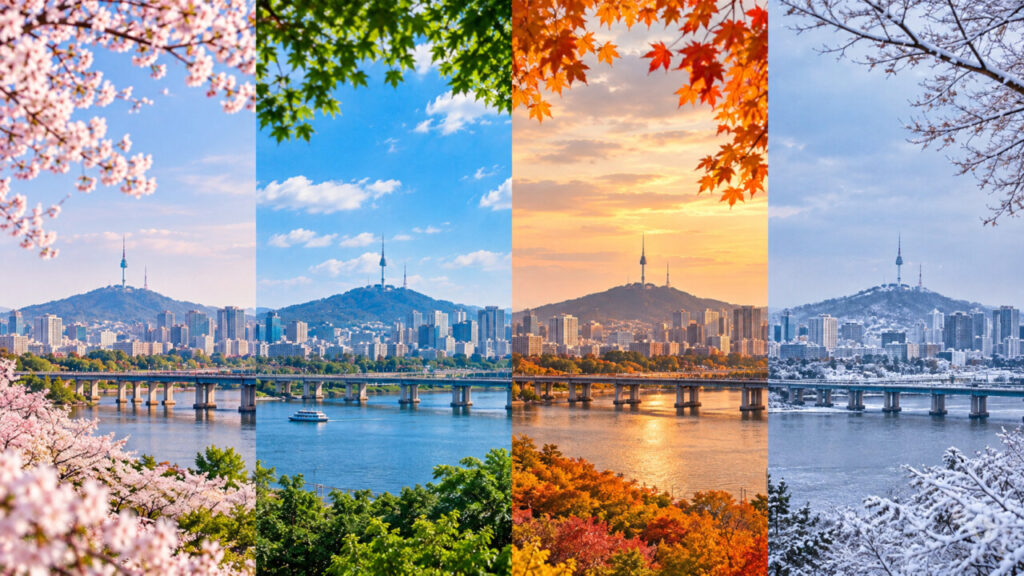
- Spring (Mar-May): Cherry blossoms usually peak around early April. Some days can be hazy with fine dust, so keep a mask handy.
- Summer (Jun-Aug): Hot and humid, with a rainy season in early summer. Plan outdoor sightseeing for mornings and evenings.
- Autumn (Sep-Nov): Crisp air and golden-red leaves, especially from late October into November. Many people call it the best season to visit.
- Winter (Dec-Feb): Cold, dry, and windy, often below freezing. Layers are your best friend, and hot street snacks are your reward.
Day 1: Old Seoul (Palaces, Hanok, and Pojangmacha Nights)
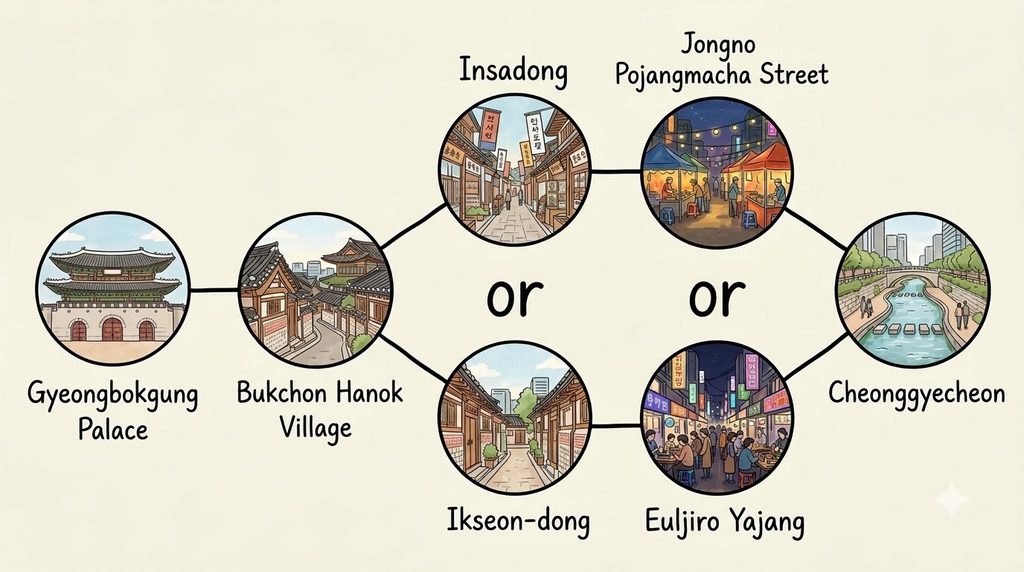
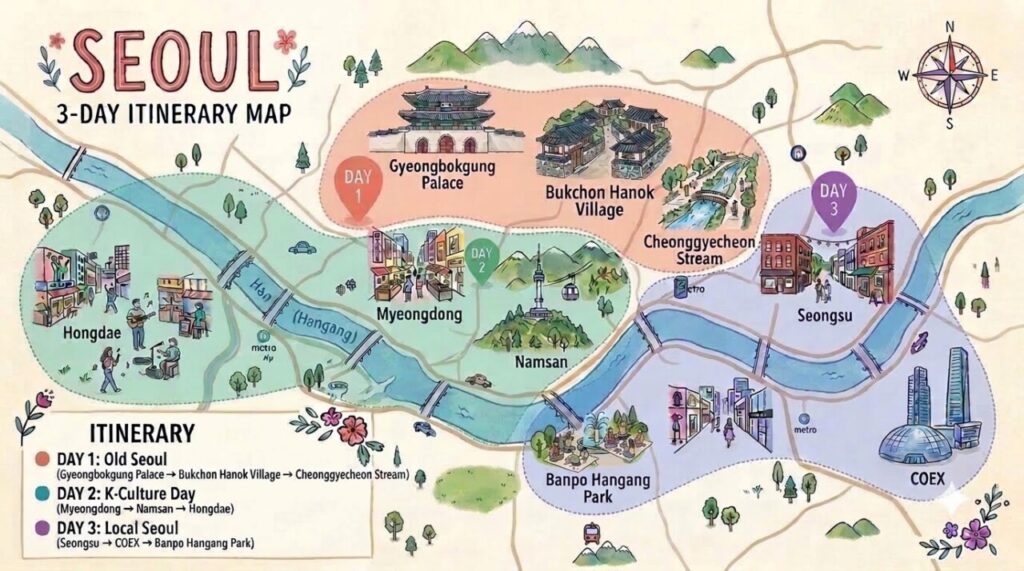
Morning: Gyeongbokgung Palace. This is the grand, drama-worthy palace you’ve seen in so many shows. Rent a hanbok (traditional Korean clothing) from one of the shops nearby, and you’ll get free entry to the palace as a bonus. Without a hanbok, the ticket is inexpensive too. Try to arrive early for the best photos before the crowds, and look for the changing of the guard ceremony at the main gate, held twice a day.
Midday: Bukchon Hanok Village. A short walk away, this hillside neighborhood is full of traditional houses. Remember: real people live here. Keep your voice down and photos respectful. Think “quiet cameo,” not “loud tourist.”
Afternoon: Insadong or Ikseon-dong. Pick Insadong for traditional tea houses and crafts, or Ikseon-dong for tiny hanok cafes and dessert. Either way, order something sweet. It’s research.
Evening: Jongno Pojangmacha Street or Euljiro Yajang. Time to see how Seoul unwinds after work. A pojangmacha is a tented street bar, and a yajang is a restaurant or bar that sets tables outdoors. Pick one:
- Jongno 3-ga Pojangmacha Street: tents, plastic stools, hot fish cake soup, and a very local vibe. It comes alive around dusk and runs until about midnight, though hours vary by stall.
- Euljiro Yajang: old-school alleys that turn into an open-air party after the workshops close. It’s seasonal and usually starts around 6 PM, and popular tables fill up fast, so arrive early.
Order a few dishes to share. If you don’t drink alcohol, you can still enjoy the food and the atmosphere. (And pace yourself with the soju. Day 2 begins with a lot of walking.)
Late evening: Cheonggyecheon. Walk off dinner along Cheonggyecheon, the restored stream that runs through the heart of the city between Jongno and Euljiro. It glows at night and makes a gentle end to the day.
Seasonal Tips for Day 1
- Spring: Do the palace in your prettiest hanbok, and chase blossoms for photos you’ll post for a month. Outdoor dining season starts too, but tables can have long waits during peak blossom weeks, so arrive early or choose the Jongno tents.
- Summer: Visit the palace right at opening to beat the heat. In the afternoon, cool down in a nearby museum, such as the National Palace Museum or the National Folk Museum. Palace tickets may also cover entry to them, so check at the ticket booth. In the evening, choose Euljiro for the lively outdoor tables, or the covered tents of Jongno if it rains.
- Autumn: Swap the afternoon for Changdeokgung Palace and its Secret Garden during peak foliage. The garden needs a separate timed ticket with a guided tour, so book ahead. And remember, the palace is closed on Mondays. Then enjoy Euljiro’s outdoor tables in the crisp evening air, when they’re at their liveliest.
- Winter: Layer warm clothes under your hanbok. Outdoor yajang is a seasonal treat that fades in the cold, so pick the Jongno tents for hot fish cake soup instead, and keep the Cheonggyecheon stroll short and sparkly.
Day 2: K-Culture Day (Myeongdong, Namdaemun, Namsan, and Hongdae)
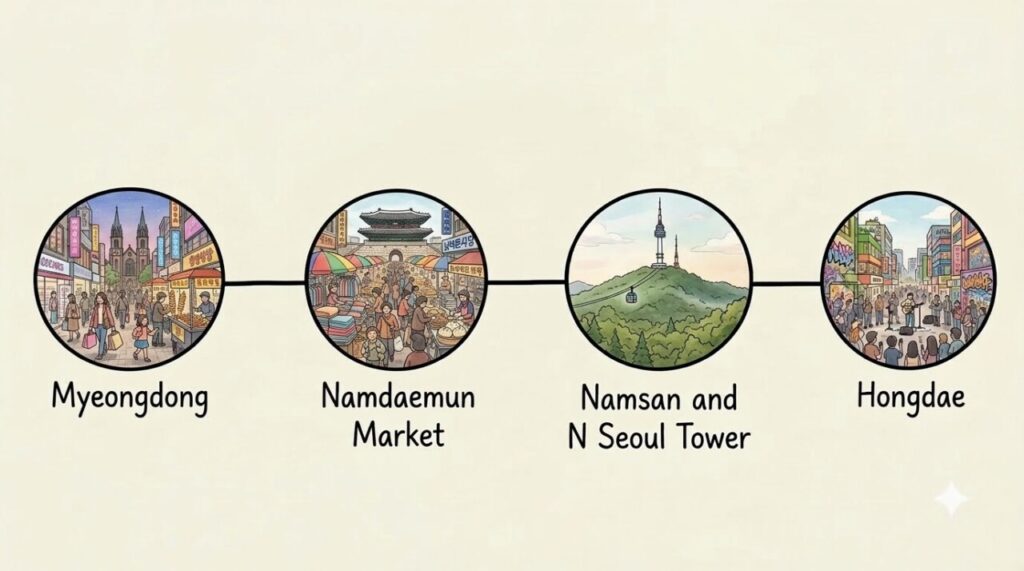
Morning: Myeongdong. This is skincare-and-snacks central. Browse beauty shops (yes, the ones with the sheet masks piled to the ceiling), grab street food, and try samples. Pace yourself, because you will want to buy everything.
Midday: Namdaemun Market. A short walk from Myeongdong, this is one of Seoul’s largest and oldest traditional markets, with thousands of shops and stalls. Come hungry. Famous bites include hotteok (sweet filled pancakes), mandu (dumplings), kalguksu (hand-cut noodle soup), and tteokbokki. Hours vary by shop, and many stalls close on Sundays, so try not to plan Day 2 for a Sunday. Let Naver Map guide you, because the alleys are a delicious maze.
Afternoon: Namsan and N Seoul Tower. Walk back toward Myeongdong and either hike up through the park or take the cable car, then enjoy the best “Seoul skyline” moment of the trip. You’ll recognize this view from countless dramas. Bring a friend for the dramatic-pause photo.
Evening: Hongdae. This is Seoul’s youthful, music-loving side, with street performers, fashion shops, and a buzzing nightlife. For the full K-pop fan experience, finish at a noraebang (private karaoke room) and sing your favorite songs. No judgment, and the tambourine is mandatory.
Seasonal Tips for Day 2
- Spring: Skip the cable car and walk up through Namsan Park. Cherry blossoms often brighten the paths in early April, though timing changes every year. Check the forecast before you go.
- Summer: Do Namdaemun early or choose its covered alleys and indoor food areas to dodge the heat and rain. Go up Namsan close to sunset, when it’s cooler and the city lights turn on. Take a break with bingsu (shaved ice dessert) in Myeongdong or Hongdae. It’s practically a cooling system.
- Autumn: Walk the Namsan trails for golden leaves, and time the tower for a clear, crisp-air sunset. Eat an early lunch at Namdaemun before the crowds arrive.
- Winter: Namdaemun is made for cold days. Warm up with hotteok, mandu, and hot noodle soup. Take the cable car up Namsan so you don’t freeze on the climb, and enjoy the wonderfully sharp winter night view.
Day 3: Local Seoul (Seongsu, COEX, Banpo Hangang Park, and Sinsa or Apgujeong)
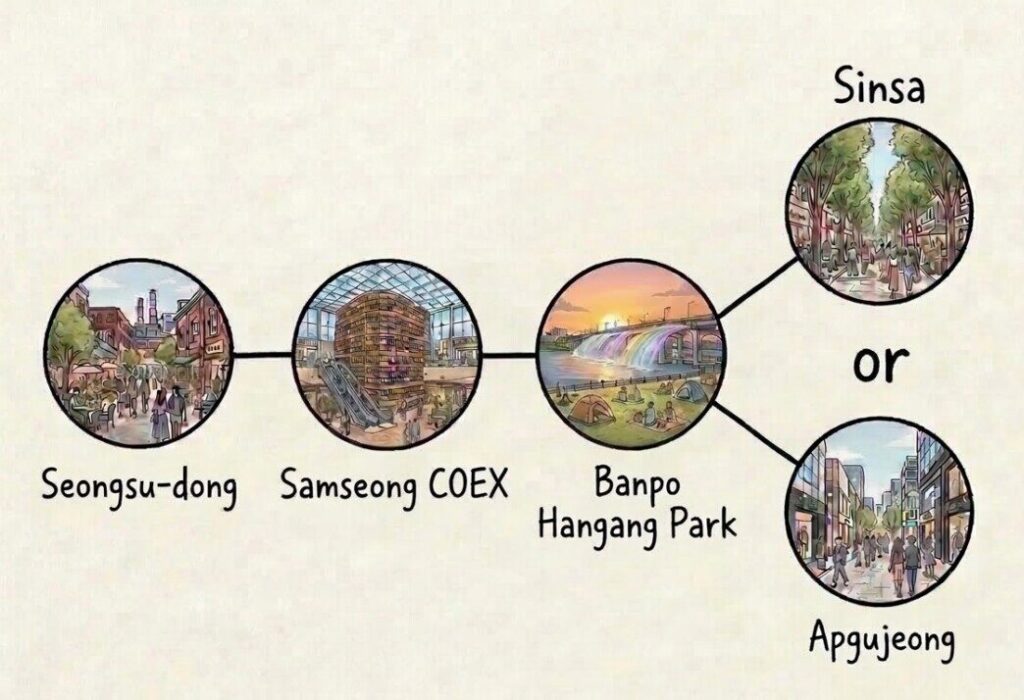
Morning: Seongsu-dong. Think converted factories turned into cafes, boutiques, and pop-up stores. It’s where trends often appear first. Sip something photogenic and wander without a plan.
Midday: COEX. Hop on Line 2 and ride straight to Samseong Station, where one of the largest underground shopping malls in Asia awaits. The star is the Starfield Library, a free, open reading space with towering bookshelves in the middle of the mall. Arrive early, because it gets crowded by the afternoon. Right across the street, Bongeunsa Temple has stood for over a thousand years, and the contrast with the skyscrapers is wonderfully dramatic. Entry is free.
Afternoon to evening: Banpo Hangang Park. This is the most local thing you can do in Seoul. Grab a mat, order fried chicken delivered to the park (yes, really), and cook instant ramyeon at a convenience store nearby. It’s a rite of passage. And from spring through October, the star of the park is the Banpo Bridge Moonlight Rainbow Fountain, a long water show with colorful lights that runs several times each evening. Show times change by season and it can be canceled in rain or strong wind, so check the schedule before you go.
Night: Sinsa or Apgujeong. Finish in Gangnam, with one of two moods:
- Sinsa (Garosu-gil): a tree-lined street of boutiques, dessert cafes, and cozy restaurants. Pick this for a relaxed, cafe-hopping finale.
- Apgujeong: polished fashion, beauty shops, and excellent people-watching. Pick this for a dressier, shopping-and-strolling finale.
If you caught the fountain show first, you’ll find plenty of dinner spots waiting in both areas.
Seasonal Tips for Day 3
- Spring: Bongeunsa Temple is beautiful with cherry blossoms, and the Banpo fountain season returns. The picnic shines in soft breezes. Just check the air quality that day.
- Summer: Do Seongsu in the morning, then escape the midday heat in COEX’s air-conditioned halls. Picnic after sunset, when it’s cooler. In July and August, the fountain adds a later evening show. Then cool off in Sinsa’s air-conditioned cafes.
- Autumn: Time your picnic for golden hour and stay for the fountain. Garosu-gil’s trees turn golden in late autumn, which makes Sinsa the prettiest choice for the finale.
- Winter: COEX becomes your cozy indoor highlight, and the library is especially charming during the holiday season. The fountain is typically off in winter, so skip the picnic. Take a short night walk by the river with a hot drink for the skyline views, then finish with a warm dinner in Sinsa or some shopping in Apgujeong.
A Few Last Tips
- Wear comfortable shoes. Seoul has hills, stairs, and a lot of walking.
- Bring a portable charger. Photos and map apps drain your battery fast.
- Be flexible. Weather can change your plan, and swapping days is totally fine.
- Double-check before you go. Opening hours, closing days, and event dates can change, so confirm them on official sources.
- Pojangmacha are bars. They’re lively and fun, but if you don’t drink, order food and a soft drink and enjoy the show.
The Takeaway
Seoul isn’t a city you “finish.” Three days gives you the greatest hits: old palaces, modern culture, and local life (with excellent snacks along the way). Pick your season, follow the seasonal tips, and leave a little room for surprises. Some of the best moments happen when you step off the plan.
Want more quick Seoul tips? Watch Min’s short videos on YouTube, TikTok, and Instagram, and explore our Travel guides here.
This itinerary is a general guide. Prices, hours, and closing days can change, so please double-check official sources before you go.
Official Links
- Palaces (Gyeongbokgung, Changdeokgung, and the Secret Garden): Royal Palaces and Tombs Center
- Banpo Rainbow Fountain and Han River parks: Hangang Project Headquarters, Seoul Metropolitan Government (mostly in Korean, so use your browser’s translate button)
- N Seoul Tower and Namsan: N Seoul Tower official website
- Namdaemun Market: Namdaemun Market official website (hours vary by shop)
- COEX Mall and Starfield Library: check the mall’s official website
- Events, festivals, and general Seoul info: Visit Seoul
- Nationwide tourism info: Visit Korea
- Want to talk to a real person? Call the Korea Travel Hotline at 1330 (inside Korea) or +82-2-1330 (from overseas).
For individual cafes, restaurants, and street food spots, the quickest check is the shop’s listing on Naver Map or Kakao Map. If a place is closed or has changed its schedule, simply swap the stops. Seoul always has a backup plan.